
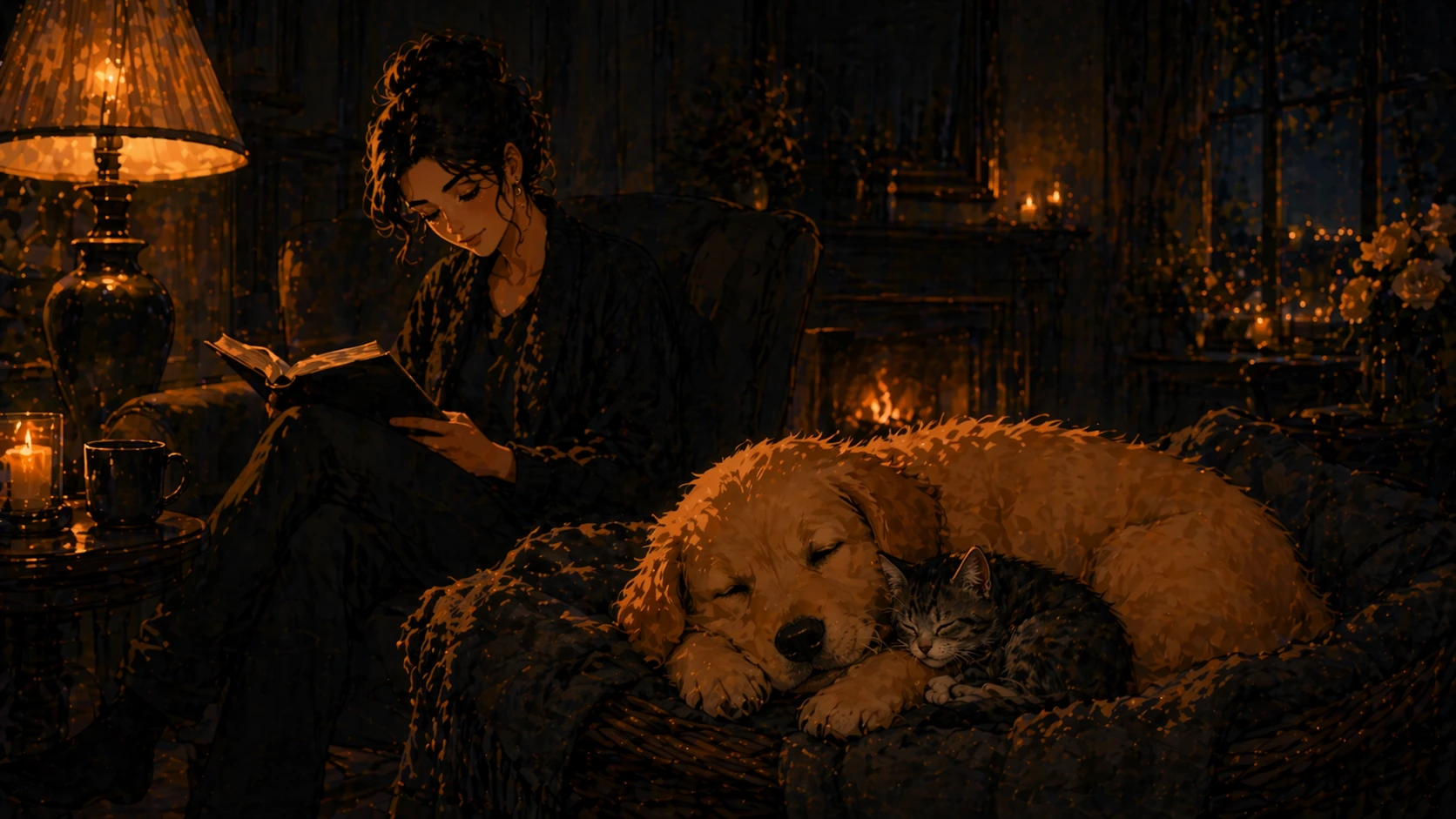
You spent $200 on obedience classes. You watched YouTube videos about positive reinforcement. You bought a clicker, a treat pouch, and a book by a woman with a hyphenated last name. You taught your dog to sit, stay, and come. You are very proud of this. Your dog, meanwhile, taught you to do the following, and you did not even notice. 1. The 6:14 AM Wake-Up. Your dog does not own a clock. It does not need one. Every morning, at 6:14 AM, give or take ninety seconds, it stands beside your bed and breathes on your face. Not a bark. Not a whine. Just breathing. Warm, slightly fishy breathing, inches from your nose. You tried ignoring it. You lasted two days. Now you get up at 6:14 AM on weekends, holidays, and the morning after your birthday party. Your dog has trained you to wake up before your alarm without ever making a sound. 2. The Door Stare. Your dog sits by the back door and stares at it. Not at you. At the door. It does not bark. It does not scratch. It just stares, with the intensity of someone trying to move an object with their mind. You are across the house. You feel the stare. You get up and open the door. The dog goes outside, stands on the porch for eleven seconds, and comes back in. You have just been summoned and dismissed by an animal that weighs less than your luggage. 3. The Dinner Orbit. You are cooking. The dog is in the kitchen. Not begging. It would never beg. It is simply present, maintaining a precise orbital distance of approximately 2.5 feet from your legs at all times. When you move to the stove, it adjusts. When you move to the counter, it recalibrates. It is a satellite locked in geosynchronous orbit around your ankles. Eventually, you drop something. A piece of cheese. A shred of chicken. The dog is there before it hits the ground. This was not an accident. This was a long-term investment strategy. 4. The Walk Vocabulary. Your dog does not speak English. It does not need to. It has trained you to never say the word walk, leash, outside, park, car, or go in any context unless you are prepared to follow through. You have developed an elaborate system of spelling, whispering, and euphemism. You say should we do the thing? to your partner, who nods, and both of you reach for your shoes in silence while the dog, who has already decoded every possible variation of this conversation, is waiting by the door. 5. The Guilt Trip. You are leaving the house. The dog is not coming. It knows this. It sits by the door and looks at you with an expression that combines disappointment, betrayal, and a quiet acceptance of its own mortality. You are going to the grocery store for fifteen minutes. You feel like you are abandoning a child at an orphanage. You buy the dog a treat on the way home. The dog has now associated your guilt with snacks. This was the plan. 6. The Bed Expansion. Your dog started sleeping at the foot of the bed. Then it moved to the middle. Then to your side. Then onto your pillow. You now sleep in a narrow strip along the edge of a king-size mattress while a 40-pound animal sprawls diagonally across the remaining 85% of the surface. You have a $1,200 mattress. You use approximately $200 worth of it. 7. The Selective Hearing. Your dog can hear a cheese wrapper being opened from three rooms away, through two closed doors, while asleep. It cannot hear come here when it is ten feet away in the backyard, looking directly at you. This is not a hearing problem. This is a choice. Your dog has trained you to accept that obedience is conditional and always has been. 8. The Belly Trap. The dog rolls onto its back, exposing its belly. You reach down to pet it. The dog grabs your hand with its paws and gently mouths your fingers. You are now trapped. You cannot leave until the dog releases you. You had things to do. You had a meeting. The dog does not care about your meeting. 9. The Specific Spot. Your dog has one spot on its body that, when scratched, causes its back leg to kick involuntarily. You know exactly where this spot is. You can find it in the dark. You scratch this spot multiple times per day, not because the dog asks, but because the leg kick makes you laugh every single time. The dog has trained you to find joy in repetition. 10. The Post-Walk Inspection. After every walk, you check your dog's paws for burrs, glass, and ice. You examine its coat. You give it water. You watch it settle onto its bed. This takes five to eight minutes. You do not do this for yourself after a walk. You come home, kick off your shoes, and sit on the couch. Your dog has trained you to care more about its comfort than your own. 11. The Goodnight Ritual. Every night, before you go to bed, you find the dog. You crouch down. You scratch behind its ears. You say something like goodnight, buddy, or sleep well, you ridiculous animal. The dog sighs. You go to bed. You have done this every night for years. If you skip it, the night feels wrong. Incomplete. Like you forgot to lock the door. One day, you will reach down for the goodnight scratch and the dog will not be there. And you will understand, in that terrible clarity that only absence provides, that every single one of these rituals was a gift. Not from you to the dog. From the dog to you.
Keep Reading

Stay close to the work.
Gentle updates as Evermeadow takes shape. No spam.